

School Improvement
One Trust. Strong schools. Improvement together.
Our School Improvement Strategy 2026–29 sets out how we will work together to strengthen our schools, develop our leaders and deliver consistently high standards of education across the Trust.
Built around a shared commitment to continuous improvement, the strategy provides a clear framework for understanding what works well, identifying areas for development and ensuring that the right support and expertise are available where they are needed most. By combining collective ambition with the individual strengths of our academies, we aim to create a culture where effective practice is shared, improvement is sustained and every pupil benefits from belonging to Shireland.
The Purpose: A stronger offer for every child
Every child succeeds
A consistently ambitious and inclusive education, whatever the academy.
Every leader grows
Clear expectations, timely challenge and the right expertise when it matters.
Every school improves
Accurate diagnosis, focused action and learning that moves across the Trust.
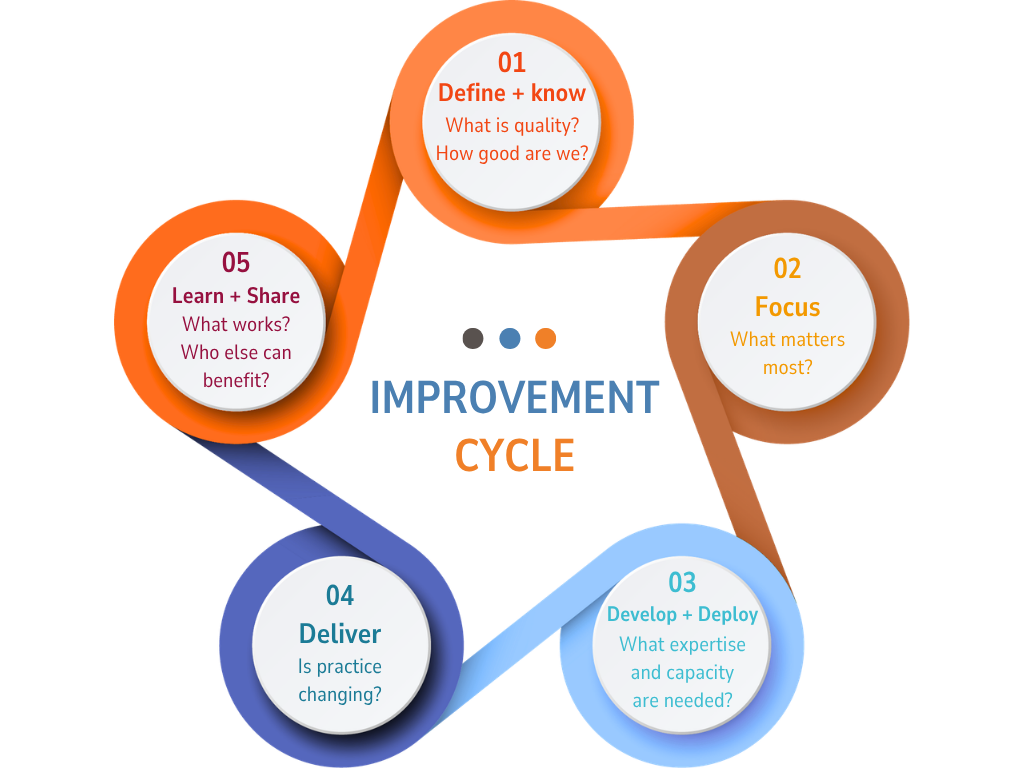
The Strategy: One improvement cycle, repeated well.
The Quality Mark defines the destination; the strategy determines how we get there.
This Year: Four priorities for 2026/27
A small, shared agenda, with academy priorities chosen from accurate diagnosis.
- Know our schools: Validated baseline, risk, strengths and coherent quality assurance.
- Inclusive teaching: Teaching principles, SEND entitlement, under resourced pupils and those whose learning is vulnerable.
- Attendance, behaviour, belonging: Reliable routines and targeted responses, especially for vulnerable pupils.
- Build improvement capacity: Leadership pipeline, Bright Spots, networks, coaching and system leaders.
The S-CAT Quality Mark: Ten domains. One coherent pupil experience.
- Shared – a common description
- Evidence led – pupils’ experience, practice, outcomes
- Developmental – aligns support
Ask of every domain: is it reliably experienced by all pupil groups?

Safe & Included
Safeguarding – vigilant, open culture; concerns acted on.
Inclusion – every pupil belongs, participates, accesses ambition.
Attendance & behaviour – regular attendance; calm, purposeful learning.

Learn & Achieve
Curriculum – ambitious, well-sequenced; adapted, not diluted.
Teaching – evidence-informed, responsive, consistent practice.
Assessment – informs decisions without unnecessary workload.
Achievement – pupils learn, remember and achieve from their starting points.

Thrive & Sustain
Personal development – confidence, character, agency, readiness for adulthood.
Leadership & culture – leaders know schools, prioritise, build capability.
Organisational effectiveness – people, finance, operations, data, technology.
Using the Quality Mark: Start with evidence. End with a better decision.
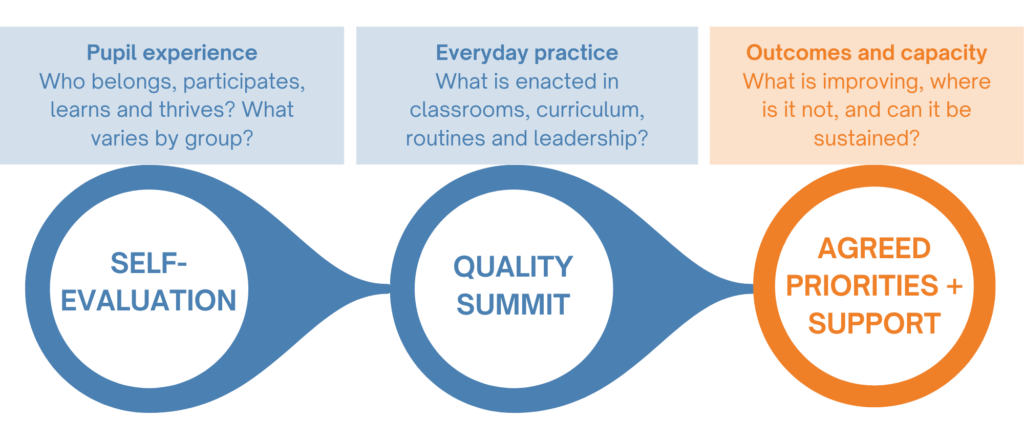
How we work together
- Trust-defined – safeguarding, compliance, data, QA.
- Collectively aligned – teaching, curriculum, assessment, professional learning
- Academy led – identity, community, enrichment, local solutions
Maturity level of school
Can the academy improve itself reliably?
- Stabilise – are foundations secure?
- Strengthen – is practice consistent across teams?
- Improve – they diagnose and implement well?
- Sustain & Lead – can excellence last and help others?
Intensity of support required
What support is needed now?
- Universal – routine QA, networks, advice for all.
- Focused – targeted support, few priorities.
- Intensive – substantial deployment, short cycles.
- Recovery – executive-led; Board visibility.
What principals can expect – and what S-CAT needs
The Centre will:
- Clarify expectations and decision rights
- Provide early, proportionate support
- Challenge with evidence and respect
- Connect expertise across the Trust
Principals will:
- Know their academy accurately
- Escalate early and be candid
- Implement a few priorities well
- Share strength with other schools